
Non-native species alert
Think you've seen an Asian hornet?
Vespa velutina is not established in Oxfordshire, but sightings do get reported here. This one isn't a call-out job — it's a report-it-immediately job. Here's how to identify it and exactly who to tell.
Message us on WhatsApp for the fastest response. A photo is useful but not required — we have treated every nest type and location countless times.
Appointments available today
- 4.8 on Google
- Same-day service
- Best price locally, fully guaranteed
- Free revisit guarantee
2,000+
Nests treated
The Asian hornet (Vespa velutina) is a non-native species first confirmed in the UK in 2016, having spread rapidly across France after arriving from Asia in imported pottery around 2004. It is smaller than the native European hornet and, unlike every other insect on this site, it is not something we — or any local pest control business — should be treating on a routine basis. Confirmed sightings feed into a national monitoring and rapid-response system aimed at finding and destroying nests before the species can establish here.
How to tell it apart from a European hornet
This is the identification that matters most, because the two are genuinely easy to confuse at a glance if you're not looking at the right features.
| Feature | Asian hornet (non-native) | European hornet (native) |
|---|---|---|
| Overall size | Slightly smaller, ~25mm | Larger, up to 35mm |
| Abdomen colour | Mostly dark brown/black with one bright orange-yellow band near the tip | Brown-and-yellow banding across most of the abdomen |
| Legs | Dark legs with distinctive bright yellow tips ('yellow socks') | Legs orange-brown, no sharp yellow tips |
| Face | Orange face | Yellow face |
| Thorax | Dark, velvety brown/black | Reddish-brown |
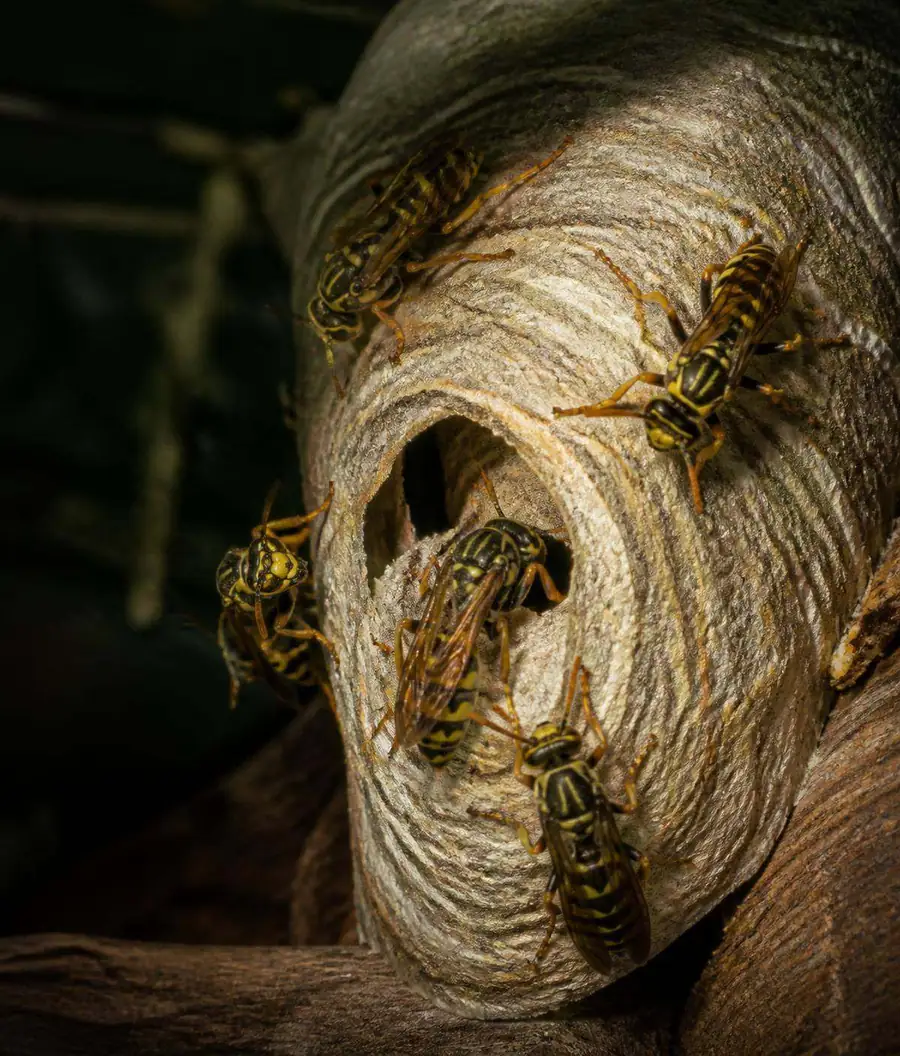
| Typical nest | Large, often high in trees, exposed and egg-shaped | Hollow trees, loft voids, wall cavities |
Why beekeepers in particular are on alert
Asian hornets are highly effective predators of honeybees. They hover in a stationary hunting pattern just outside a hive entrance and intercept returning foragers, a behaviour beekeepers call "hawking." A sustained hawking presence can starve a colony of incoming forage and collapse it within a season, which is why beekeeping groups and conservation bodies treat every credible sighting as urgent, not just a curiosity.
Exactly what to do if you think you've spotted one
- Do not approach, disturb, or attempt to destroy a nest or individual hornet yourself.
- Take a photo if you can safely do so from a distance — this is the single most useful thing you can provide.
- Report it immediately using the free Asian Hornet Watch app, available for iOS and Android, which lets you submit a photo and GPS location directly to the national recording scheme.
- Alternatively, email a photo and the location to the non-native species alert address: alert_nonnative@ceh.ac.uk.
- Do not book a pest control treatment for a suspected Asian hornet — treatment and nest destruction, once confirmed, is coordinated through the national response, not general pest control bookings.
If in doubt, report it — false alarms are fine
The national recording scheme would much rather receive ten photos of European hornets mistakenly reported as Asian hornets than miss one genuine sighting. If something looks close to the description above, report it via the app or email address rather than waiting to be certain.
What we can still help with
If you're unsure whether what you've seen is an Asian hornet, a European hornet or an ordinary wasp, send us a photo and we'll give you an honest identification and point you the right way — including to the reporting channels above if it looks genuinely suspicious. For anything that turns out to be a common UK species, our wasps vs hornets guide and European hornet guide cover identification and, where relevant, treatment. For an actual wasp or European hornet nest on your property, see our treatment page or check we cover your area.
Frequently asked questions
- Should I call you if I think I've seen an Asian hornet?
- You can, and we'll always help with identification from a photo, but this is not a job for a general pest control treatment. Confirmed Asian hornet sightings are handled by national tracking and nest-destruction teams, so the right first step is reporting it, not booking a treatment.
- How do I report an Asian hornet sighting?
- Use the free Asian Hornet Watch app to submit a photo and location, or email a photo and location to the non-native species alert address, alert_nonnative@ceh.ac.uk. Do not attempt to approach, disturb or destroy a nest yourself.
- What's the single clearest way to tell it apart from a European hornet?
- Leg colour. Asian hornets have distinctive yellow-tipped legs (sometimes described as looking like they're wearing yellow socks) against otherwise dark legs, while the abdomen is mostly dark brown to black with one bright orange-yellow band near the tip, not the broader brown-and-yellow banding of a European hornet.
- Why are Asian hornets considered such a serious threat?
- They hover outside honeybee hive entrances and pick off returning foragers, which can cripple or destroy a colony over a season. Beekeepers and conservationists treat confirmed sightings as urgent because early nests, if found and destroyed quickly, prevent much larger populations establishing.
- Is an Asian hornet sting more dangerous to humans than a European hornet's?
- Not inherently more dangerous to a non-allergic person, though as with any hornet, an allergic reaction is a medical emergency. The real-world danger of Asian hornets is to honeybee populations and biodiversity, not primarily to people.
- Are Asian hornets established in the UK yet?
- Sightings have increased in parts of southern England in recent years, largely along the south coast, but the UK's monitoring and rapid nest-destruction response means it hasn't become established the way it has in parts of continental Europe. Reporting sightings promptly is a key part of keeping it that way.
Related guides
We treat nests like this across Oxfordshire
Same-day wasp nest treatment for a fixed £109, including these areas:
Not an Asian hornet? We can help.
For confirmed wasp and European hornet nests across Oxfordshire, we offer fixed-price, same-day treatment for a fixed £109.
Call 01865 477311