
Where the nest is: loft space
Wasp nest in the loft
The loft is, by a wide margin, the most common place we find wasp nests across Oxford, Kidlington, Didcot and Botley. Here's how to spot one, what the risks actually are, and how we deal with it without ever needing to climb up there ourselves.
Message us on WhatsApp for the fastest response. A photo is useful but not required — we have treated every nest type and location countless times.
Appointments available today
- 4.8 on Google
- Same-day service
- Best price locally, fully guaranteed
- Free revisit guarantee
2,000+
Nests treated
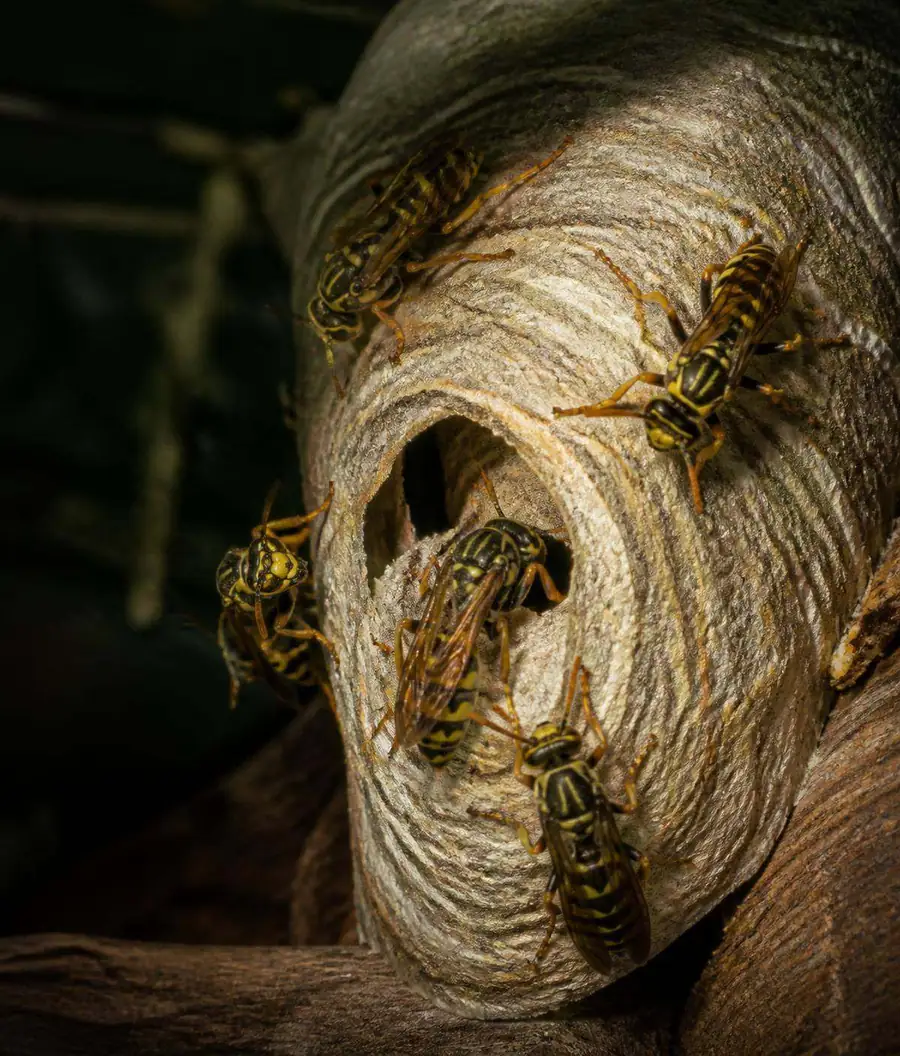
If you've heard a low, steady hum coming from your ceiling on a warm afternoon in June or July, there's a good chance a wasp colony has set up in your loft void. Lofts tick every box a queen wasp looks for in April: dry, dark, undisturbed, and usually warmer than the outside air thanks to roof insulation and sun on the tiles above. Once she's built the first few cells of a nest the size of a golf ball, the colony only grows from there — by August a mature nest can hold several thousand wasps and be the size of a football or larger.
How to tell it's actually in the loft
The giveaway sound is usually a continuous, papery buzzing that seems to come from directly above a ceiling, strongest in the room right under the roof rather than at the edges of the house. That's your first clue it's a loft nest rather than a soffit or wall cavity nest, both of which tend to sound more like they're coming from a wall or window frame. Our full breakdown of what to listen and look for is in our signs of a nest guide, but for lofts specifically, watch the outside of the house at dusk: a steady stream of wasps flying in and out of a gap under a ridge tile, gable vent, or a gap where the roof meets a chimney stack almost always means the nest is in the loft void directly beneath.
Don't feel you need to go up and check with a torch to be sure. It rarely helps us and it's genuinely one of the riskiest things you can do — a confined loft space with low headroom means you can't back away quickly if wasps become defensive, and stings to the face and neck are more likely in that setting than almost anywhere else in the house.
Why lofts are the number one location
What makes loft nests different to treat
Because a loft is enclosed and usually has only one or two obvious access points from outside, treatment is often more straightforward than an open garden nest — we're not chasing wasps across an open space, we're targeting a defined entry gap. We apply insecticidal dust or an aerosol treatment directly to the entry point and, where the nest is accessible via a loft hatch without disturbing wasps unnecessarily, from inside too. Full detail on the method itself is on our treatment page.
Never board out around an active nest
We get calls every summer from people who've disturbed a loft nest while laying boarding, running cables, or fitting insulation. If you've got loft work planned and you can hear buzzing, get the nest treated first — it's a small delay against a genuinely bad afternoon.
| Factor | Why it matters |
|---|---|
| Access gaps | Gable vents, ridge tile gaps and torn felt at the eaves give easy entry that's rarely checked |
| Stable temperature | Insulation and roof structure keep the void warmer than open air, ideal for early nest-building in spring |
| Undisturbed | Most lofts are visited a handful of times a year, so a small nest in April can go unnoticed until it's large in August |
| Dry and dark | Exactly the microclimate a founding queen looks for before she starts the first paper cells |
When is the loft safe to use again
Most household activity in the wasp is over within a few hours of treatment as returning foragers pick up the insecticide and carry it back into the nest, but we recommend keeping the loft hatch closed for at least 24 hours. If you store Christmas decorations, luggage or anything else up there that you need urgently, tell us on the phone and we'll talk you through what's safe when.
One nest rarely means a lasting loft problem if you follow up with basic proofing once the colony is dead — see our prevention advice for the gaps worth sealing. If it's actually hornets rather than wasps up there, which does happen with the larger nests we see in rural parts of Oxfordshire, the approach is slightly different — details on our hornets page.
- Continuous buzzing directly overhead, strongest in one room, points to a loft nest
- Watch gable vents, ridge tiles and gaps at the chimney for wasps flying in and out at dusk
- Never enter the loft to investigate an active nest yourself
- Treatment targets the entry point from outside, so full loft access usually isn't needed
- Keep the hatch closed for 24 hours after treatment before storing or retrieving items
Frequently asked questions
- How do I know the nest is in the loft and not the eaves?
- Loft nests usually sound louder directly overhead in a bedroom ceiling, and you'll often see wasps flying up under a gable end or ridge tile rather than along a soffit line. We confirm the exact spot from outside before treating.
- Do you need to go into my loft to treat the nest?
- Almost never. We treat through the entry point wasps are using from outside or from the loft hatch without disturbing insulation or boarding, so there's no need to search the loft ourselves.
- Is it dangerous to go up and look myself?
- Yes — a torch and curiosity near an active nest in a confined loft space is one of the more common ways people get multiple stings. Leave the hatch closed and call us instead.
- Will the nest come back next year in the same loft?
- The exact nest never survives winter, but the same loft can attract a new queen the following spring if entry points aren't addressed, which is why we advise on sealing once the current nest is dead.
- How long after treatment is it safe to go into the loft?
- We advise leaving it a minimum of 24 hours, and ideally waiting for our guidance, since wasps returning to the nest during that window are still active and defensive.
- What if the nest is above a bedroom I use every night?
- This is genuinely one of the more stressful call-outs we get, and we prioritise same-day appointments for exactly this reason — nobody wants to sleep under an active nest.
Related guides
We treat nests like this across Oxfordshire
Same-day wasp nest treatment for a fixed £109, including these areas:
Nest active? Don't leave it.
Buzzing coming from the loft? We treat same day across Oxford, Kidlington and Didcot, a fixed price of £109.
Call 01865 477311