
Where the nest is: roof tiles
Wasp nest under roof tiles
Cotswold stone cottages roofed in Stonesfield slate, clay pantiles on older Oxford terraces, and concrete interlocking tiles on 1970s Kidlington estates all get wasps under them — but for slightly different reasons in each case.
Message us on WhatsApp for the fastest response. A photo is useful but not required — we have treated every nest type and location countless times.
Appointments available today
- 4.8 on Google
- Same-day service
- Best price locally, fully guaranteed
- Free revisit guarantee
2,000+
Nests treated
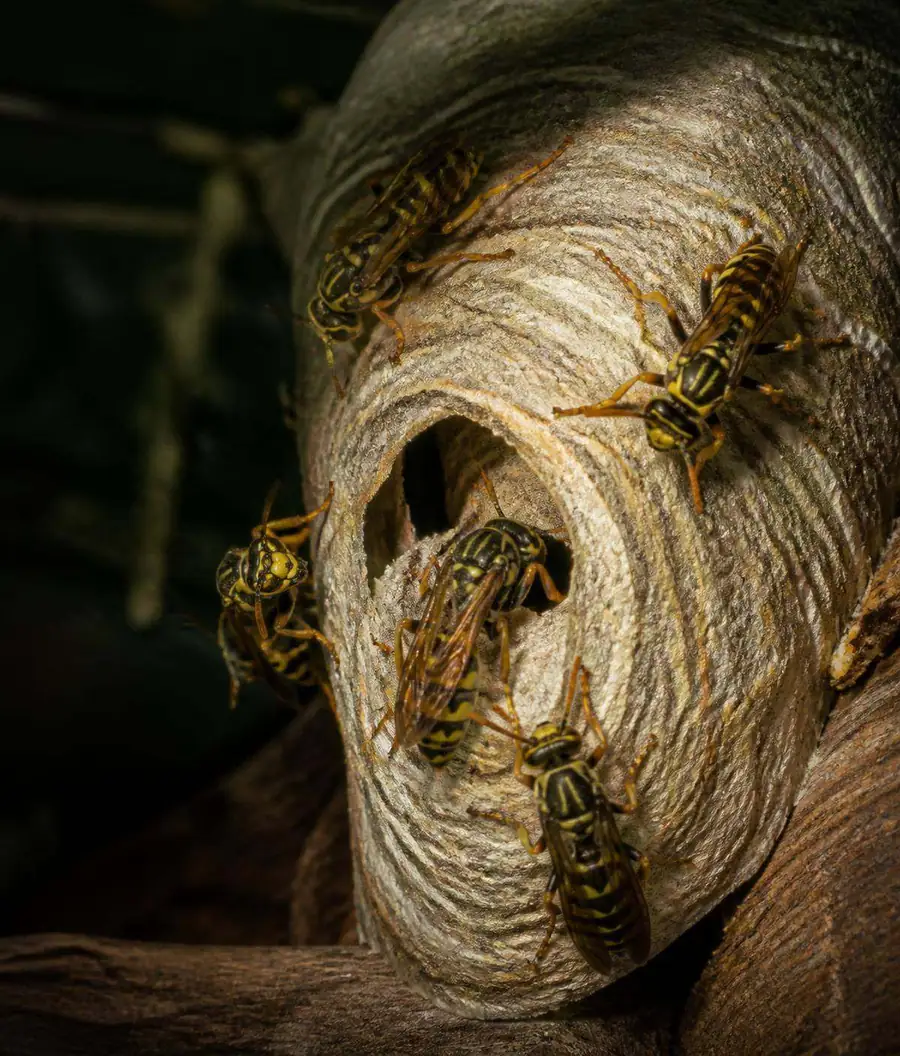
A nest under roof tiles sits in the void between the underside of the tile and the roofing felt or torching beneath it, sometimes extending into the open loft space if there's a gap in that layer too. Unlike a full loft nest, tile-void nests are often smaller and flatter, wedged into a shallow gap rather than hanging free, but they're no less capable of building up to a mature colony over a season.
Why traditional Oxfordshire roofs are more exposed
Stonesfield slate and other natural stone tiles are hung on timber battens with a good deal more natural variation in size and lie than a modern machine-made tile, and many older roofs in the Cotswolds and villages around Burford and Chipping Norton were originally torched — meaning the underside of the slates was bedded in lime mortar to stop wind-driven rain and snow getting through. That torching perishes over decades, leaving gaps exactly where wasps want them: dry, sheltered, and close to a ridge or verge entry point. Clay pantiles on Victorian terraces in Jericho have their own version of the same problem, with the distinctive S-shaped profile leaving small void pockets along every course.
| Roof type | Typical entry point |
|---|---|
| Stonesfield slate / stone tile | Gaps where torching mortar has crumbled, especially near the ridge |
| Clay pantile | Void pockets along the tile profile, often near a verge or hip |
| Concrete interlocking tile | Gaps at ridge tiles or where a tile has slipped slightly out of line |
| Any roof with ridge tiles | Mortar joints between ridge tiles that have cracked or come loose |
Why sealing the gap yourself usually fails
It's tempting to grab a tube of mastic or expanding foam the moment you spot wasps going in and out near the ridge, but treating this as a DIY sealing job before the nest is dead almost always backfires. Wasps are strong enough to chew through fresh foam within hours, and a colony sealed in with no way out doesn't simply give up — some will die in place (leading to a smell that lingers for weeks under the tiles), while others will find or force a new gap, occasionally coming out somewhere far less convenient, like inside a bedroom ceiling. The right order is always: treat first, confirm the nest is inactive, then seal or repair.
Roof work planned?
If you've got a roofer booked for repointing, re-torching or ridge tile work and you've noticed wasps, get the nest treated first. It protects your roofer as much as it protects you, and it means the repair actually stays sealed rather than being reopened by a trapped colony.
How we treat a nest under tiles
We apply insecticidal dust directly to the entry gap wasps are using, which they carry back into the nest themselves, so there's rarely any need to lift or disturb tiles to reach the nest directly. This is one of the more common call-outs we get across Burford, Woodstock and the villages around Witney, where a huge amount of the older housing stock is stone-roofed. For nests that turn out to be inside the loft space rather than the tile void itself, our loft nest guide covers that scenario, and if it's actually at the guttering line rather than higher up the roof, see soffits and fascias instead.
Once the nest is confirmed dead, any mortar or torching repair is a job for a roofer, but we're happy to point out exactly where the entry gap was so it doesn't get missed. General entry-point advice for the rest of the property is on our prevention page.
- Wasps entering near a ridge, verge or hip tile usually means the nest is in the tile void
- Never seal an active entry gap with foam or mastic before the nest is treated
- Traditional stone and clay roofs with perished torching are more exposed than modern tiled roofs
- Treatment is applied to the entry point, so lifting tiles is rarely necessary
- Hold any roof repair or repointing until the nest is confirmed dead
Frequently asked questions
- Why do old stone roofs get more wasp nests?
- Stonesfield slate and other traditional stone tiles are laid with more natural gaps and variation than modern interlocking tiles, and the battens and torching (the mortar bedding under the slates) crumble with age, opening up voids that wasps can get into from a ridge or verge.
- Can I just fill the gaps under my tiles with expanding foam?
- Not while the nest is active. Sealing an occupied entry point traps wasps, which will either die and cause a smell, or find and enlarge a different gap to get out — sometimes into the loft or a room below.
- Will removing and refitting a ridge tile disturb the nest badly?
- It can, which is why we always ask a roofer to hold off any tile work until we've treated the nest and confirmed it's inactive, rather than working the other way round.
- Is a nest under tiles more expensive to treat than a loft nest?
- No — our pricing is one fixed £109 wherever the nest is, with no extras and nothing added on the day.
- Does this affect listed or conservation-area properties differently?
- The treatment itself doesn't change, but any tile repair or mortar work afterwards may need to match existing materials, which is a conversation for your roofer rather than us — we're just clearing the nest safely.
- How do I know it's under the tiles and not in the loft itself?
- If wasps are visibly entering and leaving from a specific gap between tiles, at a ridge, or along a verge rather than from inside a gable vent, the nest is more likely sitting in the tile void than the open loft space beneath.
Related guides
We treat nests like this across Oxfordshire
Same-day wasp nest treatment for a fixed £109, including these areas:
Nest active? Don't leave it.
Wasps under your tiles or ridge? We treat stone and clay roofs across Oxfordshire, a fixed price of £109.
Call 01865 477311