
Stings & safety
How to treat a wasp sting
Most wasp stings are painful, uncomfortable for a few days, and nothing more. Here's exactly what to do in the first minutes, what a normal reaction looks like as it develops, and the handful of situations that need urgent medical help.
Message us on WhatsApp for the fastest response. A photo is useful but not required — we have treated every nest type and location countless times.
Appointments available today
- 4.8 on Google
- Same-day service
- Best price locally, fully guaranteed
- Free revisit guarantee
2,000+
Nests treated
If you've just been stung in an Oxfordshire garden, shed or loft this summer, the good news is that a single wasp sting is rarely dangerous. It hurts — often more sharply than a bee sting — and it will swell, itch and throb for a day or two, but for the vast majority of people it settles on its own with basic first aid. This guide covers what to do straight away, what to expect over the following days, and where the line sits between "normal, if unpleasant" and "needs a doctor now".
First aid: what to do in the first few minutes
- Move away from the area. A single sting often means a nest or a food source is nearby. If you were stung near your house, it's worth checking for a wasp nest nearby before you go back.
- Check for a sting left in the skin. There usually won't be one — see below — but if you're not sure whether it was a wasp or a honeybee, glance at the skin. A visible black sting means bee, not wasp.
- Wash the area with soap and water. This reduces the risk of the puncture becoming infected.
- Apply a cold compress — a flannel wrung out in cold water, or a wrapped ice pack — for 10 minutes at a time. This limits swelling and takes the edge off the pain.
- Raise the affected limb if possible. A stung hand or foot swells less if kept elevated for the first hour or two.
- Take a painkiller if needed. Paracetamol or ibuprofen (following the packet dose) is fine for most adults.
- Consider an antihistamine. An oral antihistamine such as cetirizine can reduce itching and swelling, particularly if the sting is on the face or hand.
Avoid scratching the sting site — it doesn't relieve itching for long and increases the chance of breaking the skin and introducing infection.
Wasps don't leave their sting behind
This is one of the most useful facts in wasp first aid: unlike a honeybee, a wasp's sting is smooth rather than barbed, so it slides back out after stinging. That means there is nothing to scrape or pick out of the skin, and — less helpfully — the same wasp can sting you again if it's still agitated. If you can see a sting actually lodged in the skin, you were stung by a honeybee, not a wasp, and it should be scraped out sideways with a fingernail or bank card rather than squeezed with tweezers.
What normal swelling looks like, day by day
It's completely normal for a wasp sting to look worse on day two than it did an hour after it happened. This is called a large local reaction and it is not the same thing as an allergy — it's the skin's ordinary response to wasp venom, just a more vigorous version of it in some people. Roughly what to expect:
| When | What's normal |
|---|---|
| First 20 minutes | Sharp pain, a red weal, mild swelling at the puncture site. |
| 2-24 hours | Redness and swelling spread outward a little; itching increases; area feels warm. |
| 24-48 hours | Swelling often peaks — a stung finger can look like a sausage, a stung eyelid can nearly close the eye. This can look alarming but is usually still a local reaction. |
| 3-5 days | Swelling and redness gradually shrink; itching fades; skin may flake or bruise slightly as it settles. |
| Beyond 5-7 days | Swelling should be resolving, not growing. Ongoing growth, fever, or spreading redness at this point suggests infection, not a normal sting. |
What not to do
- Don't rely on vinegar, bicarbonate of soda, toothpaste or crushed onion — none are evidence-based treatments for a sting.
- Don't apply direct ice to bare skin for long periods — always wrap it in a cloth to avoid an ice burn.
- Don't squeeze or scratch the sting site, even though it itches.
- Don't ignore a sting in the mouth, throat or near the eye just because there's 'only one wasp' — location matters as much as the sting itself.
- Don't assume every wasp near you stung intentionally out of aggression — most stings happen when a wasp is trapped against skin or clothing, or a nest has been disturbed nearby.
When to see a GP
Most stings never need medical attention, but book a GP appointment (or call 111) if:
- Swelling is still increasing after 48 hours, or spreads well beyond the sting site.
- The area becomes increasingly red, hot, or starts weeping — signs of a possible skin infection (cellulitis).
- You develop a fever alongside the sting.
- You've been stung more than 10 times in one go, even without allergy symptoms — multiple stings deliver more venom and are worth having checked, especially in children, older adults or anyone with heart or lung conditions.
Stings that need 999, not a GP
A sting in the mouth or throat is a 999 emergency
Swelling from a sting inside the mouth, on the tongue, or in the throat can narrow the airway mechanically — this can happen even in someone with no wasp allergy at all, simply because of where the swelling is. If someone is stung in the mouth or throat, or swallows a wasp and is then stung, call 999 immediately. Sucking on an ice cube or ice lolly while waiting for help can help slow swelling in the mouth, but it does not replace emergency care.
The other 999 scenario is a whole-body allergic reaction — anaphylaxis — which is a separate topic from ordinary sting swelling and is covered in full, including the exact signs to watch for and what to do, in our guide to wasp sting allergy and anaphylaxis.
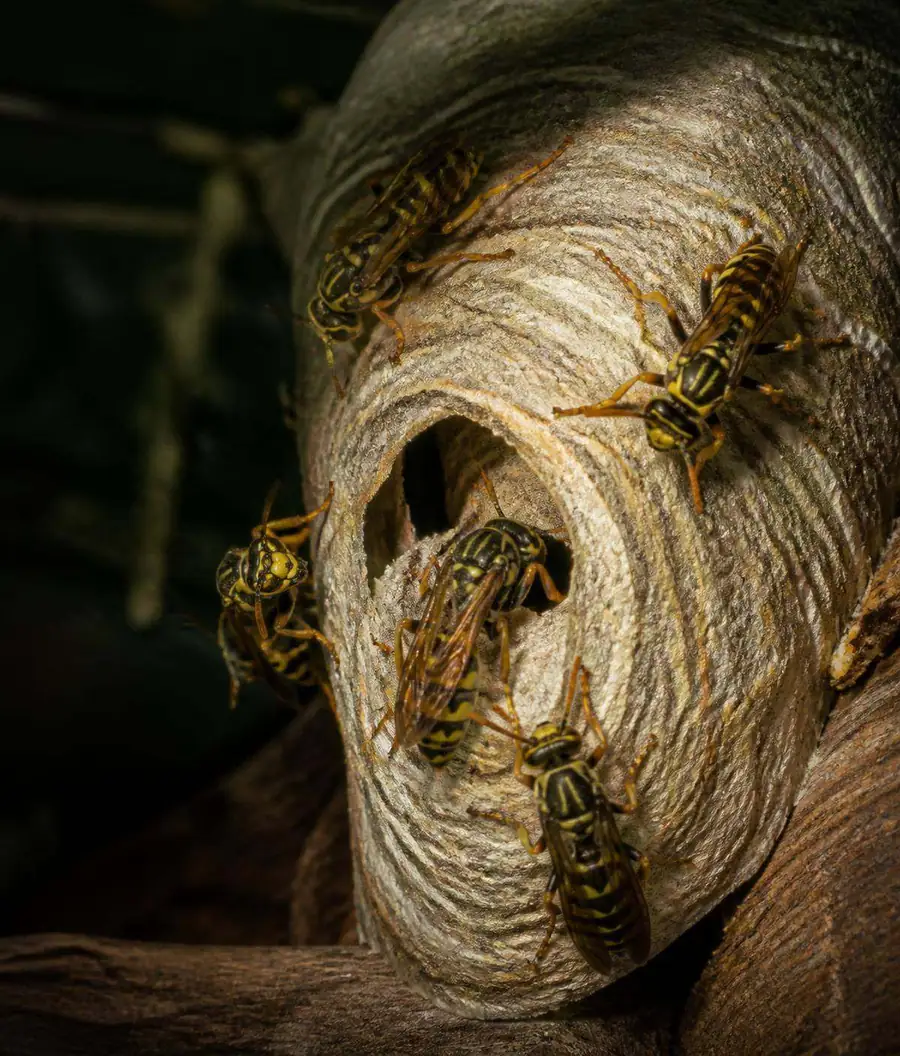
If the reason you were stung is an active nest on your property — in a loft, shed, soffit or garden — treating it properly is the only way to stop repeat stings. See our guide on signs of a wasp nest or find out about our nest treatment service covering Oxford, Abingdon, Banbury, Bicester, Witney, Didcot and the surrounding area.
Frequently asked questions
- Do wasps leave their sting behind like bees?
- No. A honeybee's barbed sting tears free and stays in the skin, which is why it needs scraping out. A wasp's sting is smooth, so it pulls its sting back out and can sting you again. There is nothing left to remove after a wasp sting, so don't waste time searching for one.
- Should I put vinegar or bicarbonate of soda on a wasp sting?
- Neither is necessary and there's no good evidence either helps. A cold compress and, if needed, an antihistamine or paracetamol/ibuprofen for pain is the sensible approach recommended by the NHS.
- How long does wasp sting swelling normally last?
- Redness, pain and swelling in the first few hours are normal, peak around 24-48 hours, and usually settle within 3-5 days. A large local reaction can take up to a week to fully resolve.
- Is it normal for a sting to swell up a lot the next day?
- Yes, a degree of increasing swelling into day two is common and is called a large local reaction, not an allergy. It's only a concern if it keeps spreading well beyond 48 hours, or is accompanied by fever or spreading redness suggesting infection.
- When should I see a GP after a wasp sting?
- See a GP if swelling keeps growing after 48 hours, the area looks infected (increasing redness, warmth, pus, fever), or you've been stung many times at once. Go to A&E or call 999 immediately for a sting in the mouth or throat, or any sign of a whole-body reaction.
- Can a wasp sting in the mouth be dangerous even without an allergy?
- Yes. Swelling inside the mouth or throat can narrow the airway regardless of whether the person is allergic, simply because of the location. Any sting inside the mouth, on the tongue, or in the throat needs immediate medical attention — call 999.
- Can I get stung by the same wasp twice?
- Yes. Unlike a honeybee, a wasp keeps its sting and can sting repeatedly, which is one reason a disturbed nest is so much more dangerous than a single wasp on your sandwich.
Related guides
We treat nests like this across Oxfordshire
Same-day wasp nest treatment for a fixed £109, including these areas:
Nest active? Don't leave it.
Been stung because there's a nest on your property? We treat wasp and hornet nests same-day across Oxfordshire, a fixed price of £109.
Call 01865 477311