
Winter checks
Roof or loft work this winter? Wasp checks worth doing while you're up there
Winter is when lofts get boarded and roofs get fixed, and it's also the one time of year you can look at last summer's wasp problem without any wasps. Here's what to check.
By the Wasp Nest Removal Oxfordshire team · · 5 min read
Home / Wasp season blog / Winter roof and loft checks
The short version
- Winter is the one time you can look closely at last summer's wasp entry points without any wasps about.
- Note where any old nest was and find the gap the wasps used. That gap is what to fix while the roofer or scaffold is there.
- Large wasps asleep on rafters are queens sheltering for the winter. They aren't a nest and don't need treating.
- Don't block roof ventilation, and stop work and get advice if you find any sign of bats.
In this article
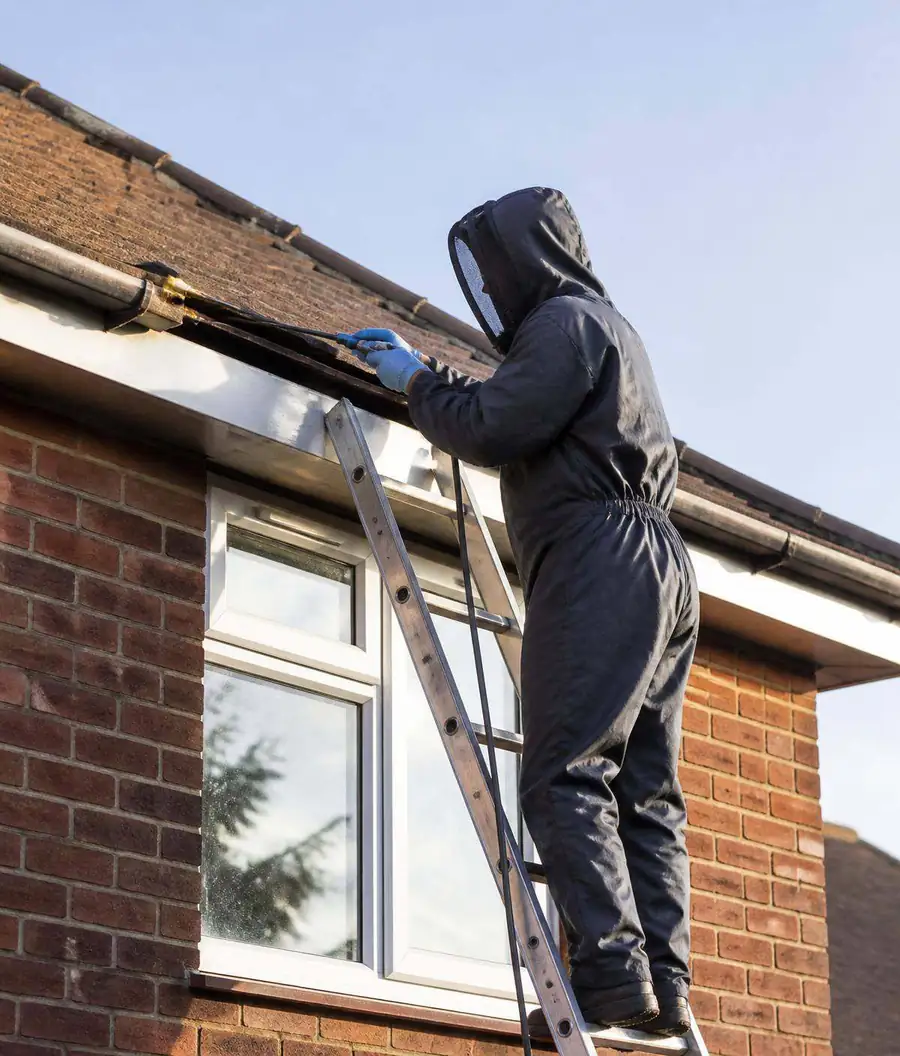
Winter is when a lot of roof and loft jobs get done. Loose tiles get fixed after the first storms, lofts get boarded and insulated, and scaffolding goes up for repairs that were put off all summer. If you had wasps last year, this is a good chance to deal with the reason they got in, at no real extra effort.
It's also the one time of year you can get close to last summer's wasp problem without any wasps. You don't need us for any of this. You just need to know what you're looking at.
Why winter is the right time to look
Wasp colonies don't survive the winter. Oxford City Council's advice is that activity falls away from October and nests die off completely once there have been some heavy frosts. The new queens leave to hibernate, and nobody goes back to the old nest.
One word of caution this year. The warm autumn kept colonies going much longer than usual, and we were still treating nests in the last week of October. If you heard buzzing in the loft recently, check the outside entry gap on a mild afternoon before anyone goes up. If nothing is flying in or out over a couple of weeks, it's finished.
Five checks while you're up there
- Look for last summer's nest. A grey, papery ball on a rafter or the loft floor, or a pile of crumbled grey paper where one used to be. It tells you which part of the roof the wasps were using.
- Find the gap they used. From outside, look at that section of roof for a gap at the eaves, a split or lifted soffit board, torn felt behind the fascia, a slipped tile or missing mortar at the ridge. From inside, daylight showing through at the eaves is often the giveaway.
- Check stored things before you move them. Queens spend the winter dormant in dry, sheltered places, and lofts and sheds are common choices. Look in folded fabric, cardboard boxes and corners between rafters.
- Look for signs of bats before anything is moved, stripped or sprayed. Bat droppings look like mouse droppings, but the Bat Conservation Trust says a bat dropping crumbles under light pressure. They build up under where bats roost and below their entry points, often in the loft or near the eaves. If you see any, stop (see below).
- Make a note for your roofer. Photograph the gap from inside and out so they know exactly where it is.
| What you find | What it means and what to do |
|---|---|
| Old papery nest, no wasps | Last summer's colony, now dead. Leave it or bag it up, and fix the entry gap. |
| One or a few large, still wasps | Queens hibernating. Leave them or move them to a shed. No treatment needed. |
| Wasps still flying in and out | A late colony not yet finished. Keep the hatch shut and give it a few weeks. Ring us if it's near a door. |
| Small dark droppings that crumble easily | Possibly bats. Stop work and get advice before going further. |
Sealing gaps without causing new problems
The point of all this is to close the gap the wasps used, so next spring's queen finds it harder to get in. Our soffits guide and roof tiles guide show the usual entry points. But not every gap in a roof is a fault, and two things matter.
Keep ventilation open. Many roofs are meant to breathe through the eaves, ridge or vents. Historic England warns that insulation pushed into the eaves can block that airflow and trap moisture against the rafters. If you're insulating, keep the eaves clear. If you're fitting mesh over a gap, make sure it's a ventilation gap being covered, not filled.
Older roofs need a lighter touch. In the stone villages around Chipping Norton and the older streets of Henley-on-Thames, many older roofs are stone slate or old clay tiles. Ask a roofer who knows that kind of roof, and see our guide to wasps in listed and thatched buildings.
Bats: the one find that stops the job
This is the check that's easiest to skip, and the one with legal teeth. Bats and their roosts are fully protected. GOV.UK lists repairing roofs and insulating lofts among the work that can harm them, and it's an offence to damage a roost or block access to one. The protection applies even when the bats are away, and bats use different spots at different times of year, so an empty loft in winter doesn't mean you're in the clear.
The roofing industry's own guidance, published this May with the Bat Conservation Trust, is simple: if bats or signs of bats turn up during a job, stop work immediately and tell the owner. The National Bat Helpline (0345 1300 228) gives free advice on small-scale work and can arrange for a volunteer to visit.
Never use wasp sprays or powders in a loft with bats
Insecticides and timber treatments are on the GOV.UK list of things that can harm bats. If you think bats might be using your roof, leave any wasp treatment to a professional and tell them before they start.
What we're telling customers
If you're having roof work done anyway, show the roofer where the wasps were going in last summer. Getting that one gap properly sealed while they're up there does more to prevent a nest next year than anything you can buy. If you're not sure which gap it was, send us a photo on WhatsApp and we'll point out the likely spot.
Whether you're in Banbury, out in the Cotswolds or down by the Thames, the same checks apply. If you find a live nest while you're up there, or you're not sure what you're looking at, ring us on 01865 477311.
Sources
- Oxford City Council – Pest control advice: wasps
- The Isle of Thanet News – Nature with Nik Mitchell: Is there a queen in your loft? (15 January 2024)
- GOV.UK – Bats: protection, surveys and licences
- Bat Conservation Trust – Property management and bats (National Bat Helpline)
- NFRC Guidance Note GN77 – Bat and roost risk management considerations during roofing works (May 2026)
- Bat Conservation Trust – Identifying bat droppings
- Historic England – Energy efficiency and historic buildings: insulating pitched roofs at ceiling level (cold roofs)
Questions we get asked
- Is it safe to go into the loft in November?
- Usually, yes. Colonies die off as the weather turns cold, and by midwinter lofts are empty of active wasps. This year ran late, though, so if you heard buzzing up there in October, check the outside entry gap on a mild afternoon first. No traffic for a couple of weeks means it's finished.
- I've found sleeping wasps in the loft. Do I need treatment?
- No. One or a few large wasps tucked into a corner or a fold of fabric in winter are queens waiting for spring. They aren't a nest and won't start one until spring. You can leave them, or move them carefully to a shed.
- Should I tell my roofer about last summer's nest?
- Yes. Show them where the wasps were going in. If they're already replacing a tile, re-bedding a ridge or fixing a soffit, sealing that gap properly costs little extra and is the most useful bit of prevention you can do.
- Can I just seal every gap so wasps can't get in?
- No. Many gaps at the eaves and ridge are there on purpose to ventilate the roof, and blocking them can cause condensation. Gaps may also be used by bats, and it's an offence to block access to a bat roost. Fix the specific gap the wasps used, and ask your roofer about the rest.
- What if we find bats, or bat droppings?
- Stop and leave them alone. Bats and their roosts are protected by law, even when the bats aren't there. The National Bat Helpline (0345 1300 228) gives free advice on small jobs and can arrange a visit.
Related guides
Wasp nest removal near you
More from the blog
Wasps causing a problem?
Same-day treatment across Oxfordshire for a fixed price, with a free revisit if it's needed.
Call 01865 477311